
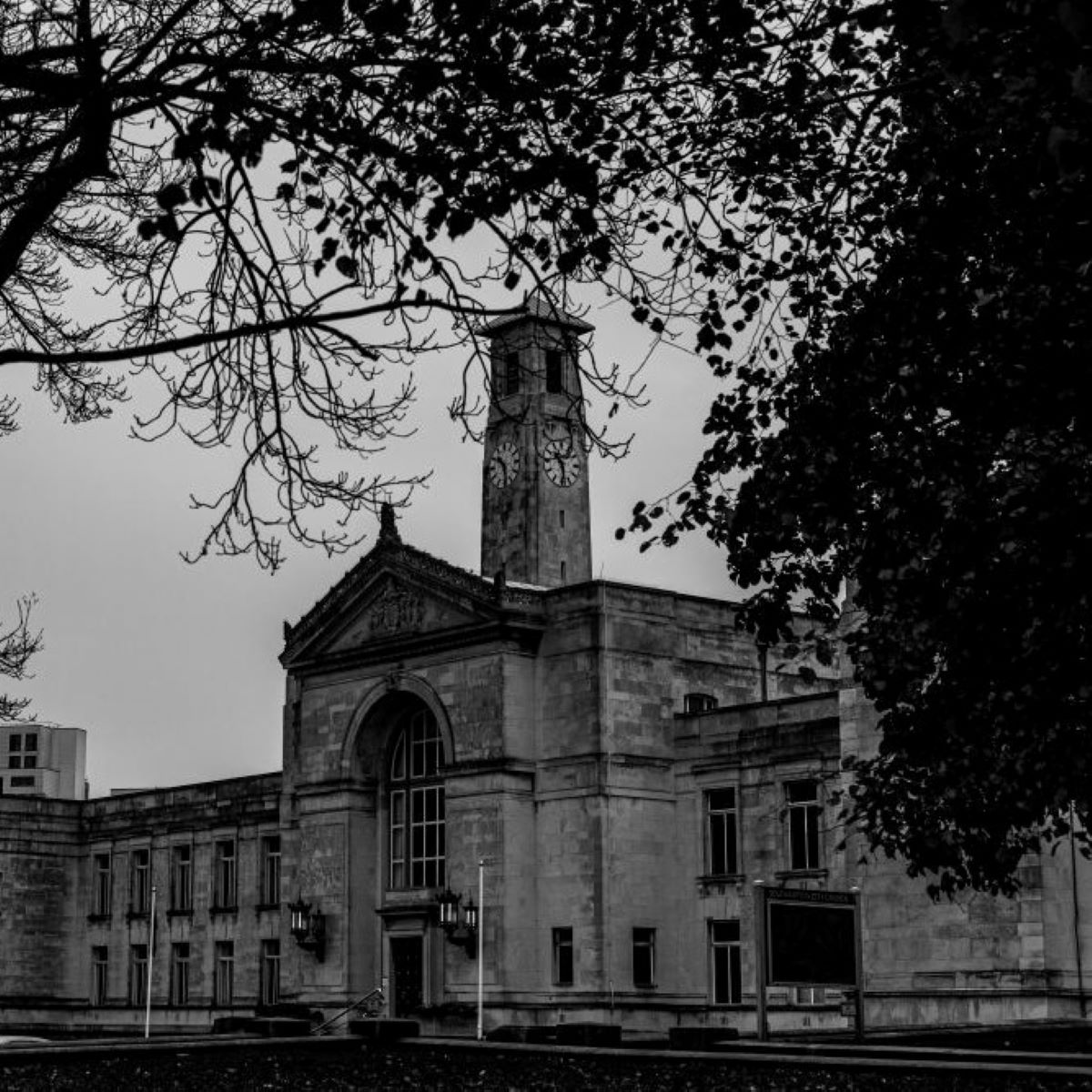
This year’s Beating of the Bounds ceremony and Court Leet will take place on Tuesday 29th September.
But what are these ancient ceremonies, which date back at least 800 years, all about?
The custom of Beating the Bounds was revived in 1957 after a gap of over 100 years. Originally, the Mayor and Sheriff toured the boundaries of the borough of Southampton on horseback to check it was intact.
It is now undertaken by car and in recent years Sheriffs have encouraged participation by local school children. At various boundary stones, the children and Sheriff beat back some of the undergrowth to make the boundary clear to all. After the boundary is checked in the morning the Sheriff returns to the Civic Centre to oversee the annual Court Leet.
This annual ceremony is the most ancient form of local court, probably with roots in Saxon law.
In the medieval period its jurisdiction covered the overseeing of standards in such matters as food and drink, weights and measures, and civic disputes.
It could investigate, judge and punish minor criminal cases such as common nuisances, encroachment on public lands and disturbances of the peace. It had powers to investigate more serious crimes but could only refer such cases to the Quarter Sessions or the Assizes.

The records of the Southampton Court Leet from 1550 to the present day are extant. Matters raised in the 16th century include water supply and rubbish disposal. Earlier records are referred to in other documents but no longer survive.
The Court Leet system was abolished in most places in 1972. Southampton is one of a handful of places still allowed to operate this ancient custom.
It originally met on Cut-thorn mound near Bassett Cross Roads on the Common, but was moved to the Guildhall which then met above the Bargate in 1616. It then moved to the Audit House in the High Street in 1856. It moved to the Law Court block on the west side of the Civic Centre in 1934.
The court is advisory only and is now held in the Council Chamber at the Civic Centre. Citizens and organisations make presentments on matters of local concern that may not have come to the attention of the council. A panel, known as the jury, is made up of aldermen, past mayors and sheriffs, a legal person and others considered suitable by the sheriff.
The court votes on whether to forward the plea to the City Council for further consideration.
If you wish to participate in this unique piece of local democracy, email member.services@southampton.gov.uk or call Democratic Services on 023 8083 2430.
- In Common is not for profit. We rely on donations from readers to keep the site running. Could you help to support us for as little as 25p a week? Please help us to carry on offering independent grass roots media. Visit: https://www.patreon.com/incommonsoton