Words: Rachel Jones. Images: Luke Shears.
Bin Juice: The Art of Making Something Out of Everything
There is something wonderfully provocative about the title Bin Juice. It conjures up ideas of waste, discarded things, uncomfortable realities and perhaps something a little unpleasant. But look a little closer and there is another possibility: transformation. Taking things that might otherwise be overlooked, bringing them together and creating something unexpected. It feels like an appropriate starting point for an exhibition that celebrates experimentation, individuality and collective creative expression.
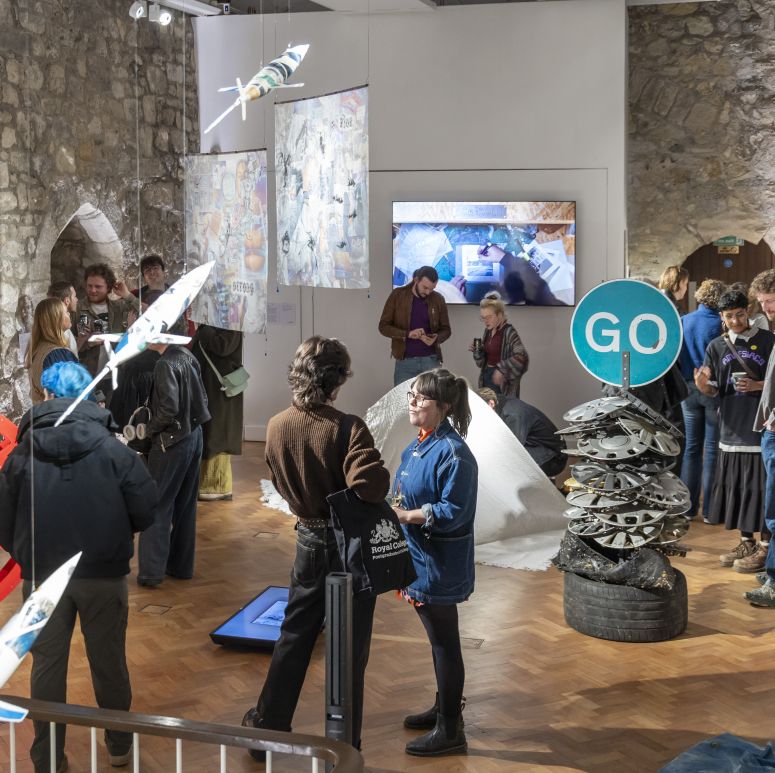
Bringing together 24 artists from ZEST Collective, Bin Juice occupies the spaces of God’s House Tower, offering a varied and often surprising collection of contemporary work. ZEST emerged from the ambitions of artists involved in RIPE, establishing an independent organisation in 2020. The collective has continued to develop a platform for artists to exhibit, experiment and support one another.
This is my first time exhibiting with ZEST, and it has been a genuinely inspiring introduction. What has struck me most is the dynamism of the group. There is strong leadership from Ellen and Net, but importantly, this doesn’t translate into a prescribed artistic identity. Instead, there is room for individual voices, different approaches and creative risk-taking. The result is a collective that feels energetic and diverse, without losing its sense of shared purpose.
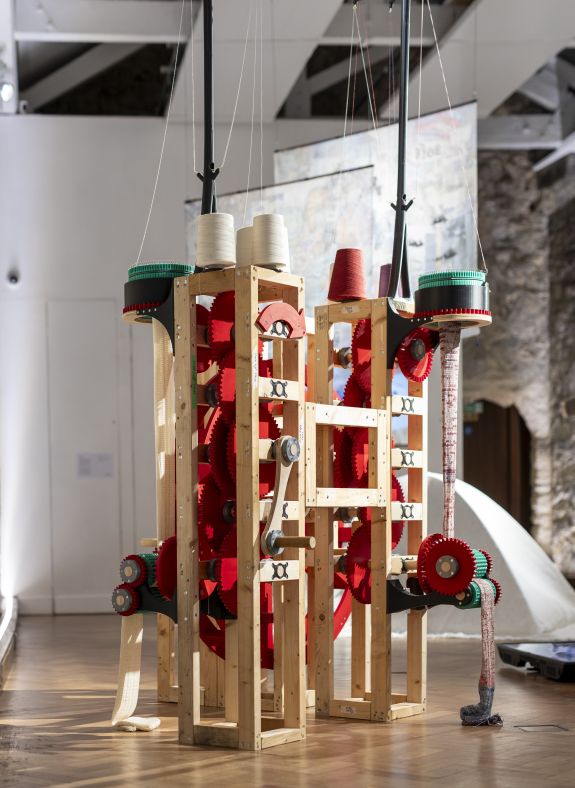
The curation is particularly impressive. Bringing together such a large number of artists and practices could easily result in an exhibition that feels crowded or fragmented, but Bin Juice flows beautifully through the building. The installation is skilful and considered, with works positioned in unexpected ways that encourage unconventional viewpoints. The relationship between the artwork and the architecture becomes part of the experience. Visitors are encouraged to look differently, to move around the work and to discover things they might otherwise have missed.
Two works particularly stayed with me. Net Ember’s Masc explores masculinity and transmasculine identity, but it is the contrast between the subject matter and its visual language that makes it so compelling. The softness of the materials and colours sits in interesting opposition to more conventional visual associations with masculinity. It has considerable visual impact, but beneath that immediate appeal is a thoughtful exploration of identity and lived experience.
Sharlott Wardner’s Fruitless offers a very different, but equally arresting experience. Intricately constructed and demonstrating a high level of technical skill, the work explores fertility, expectation, possibility and decay. There is a striking dichotomy between the beauty and precision of its making and the brutality of the subject matter. It is precisely this tension that makes the work so affecting. The craftsmanship draws you in, while the ideas challenge you to stay.
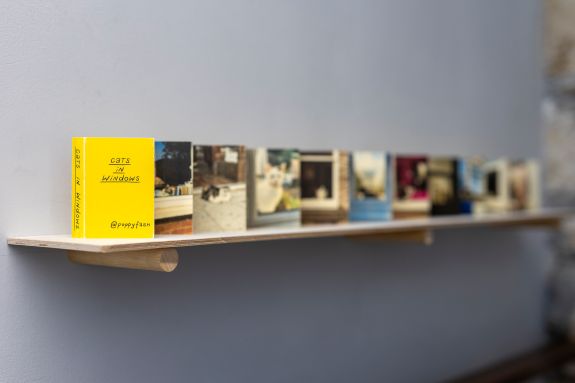
Other works invite curiosity through different means. Ellen Gillett and Kane Applegate’s Glory Hole proved particularly intriguing to visitors on the exhibition’s first day open to the public. The intervention opens up an unexpected view of the sky through the building, playing with perspective and the architecture itself. It is a reminder that art doesn’t always need to occupy a conventional frame or even behave as we might expect it to.
My own contribution to the exhibition is Out of Office, a projected goldfish exploring our relationship with constant connectivity, notifications and the expectation that we are always available. Using the fish as a playful metaphor for the pressures of modern life, the work considers what switching off might actually mean when the demands of the outside world continue to intrude. Being part of an exhibition alongside such a diverse group of artists has been an opportunity to see my own practice in a different context, and to appreciate the conversations that happen between works.
There is a real sense of playfulness throughout Bin Juice, but this isn’t an exhibition concerned solely with making people smile. Some works are humorous, others are beautiful, some are provocative and others deliberately create discomfort. There is no single aesthetic or narrative to follow. Instead, visitors are invited to be curious, to question their assumptions and to engage with work that may not always offer an easy response.
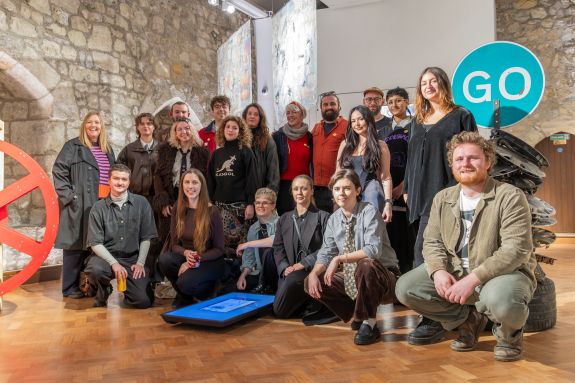
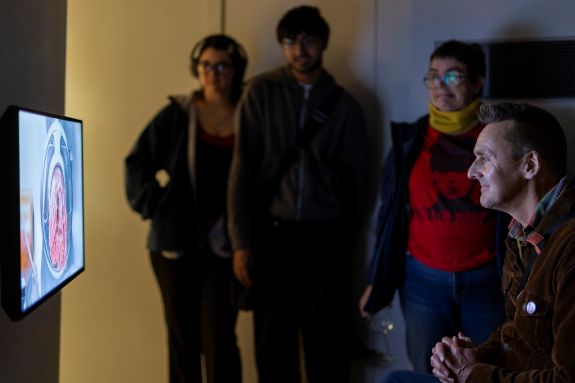
On the opening day, I watched visitors stop, look closely and show genuine interest in the work around them. That curiosity is important. An exhibition should offer more than something attractive to look at; it should create opportunities for encounters, conversations and perhaps a little disruption.
Ultimately, Bin Juice is a celebration of what can happen when artists are given the space to experiment and express themselves collectively without losing their individuality. It demonstrates the value of artist-led communities and the creative possibilities that emerge when different voices are brought together.
Perhaps the greatest success of the exhibition is that it doesn’t attempt to make everything fit neatly. It embraces difference, contradiction, playfulness and discomfort. And in doing so, it creates something considerably more interesting than the sum of its parts.
- Bin Juice by ZEST Collective runs at God’s House Tower until November 29. For more information, visit: aspacearts.org.uk/events/exhibition-fruitful-zest
- In Common is not for profit. We rely on donations from readers to keep the site running. Could you help to support us for as little as 25p a week? Please help us to carry on offering independent grass roots media. Visit: https://www.patreon.com/incommonsoton
.